Why Your Sleeping Bag Needs Washing
After a season of camping, your sleeping bag has absorbed sweat, body oils, dirt, and probably a healthy dose of campfire smoke. All of that buildup does more than just smell bad — it actually reduces your bag's ability to keep you warm.
Body oils compress down clusters and synthetic fibers, reducing loft (the fluffiness that traps warm air). A dirty sleeping bag can lose 20-30% of its insulating power. Regular cleaning restores loft and extends the life of your bag by years.
The problem is that most people are afraid to wash their sleeping bags because they've heard horror stories about ruined insulation. The truth is, washing a sleeping bag is straightforward — you just need to know the right method for your bag type.
Synthetic vs. Down: Know Your Bag
Before you wash anything, check the tag inside your sleeping bag to determine whether it's synthetic-fill or down-fill. This matters because the two types require different detergents and slightly different care.
- Synthetic bags (polyester fill) — More forgiving to wash. Can handle slightly warmer water and regular gear-safe detergent. Brands like Coleman, Teton Sports, and Kelty mostly make synthetic bags.
- Down bags (goose or duck down fill) — Require specialty detergent like Nikwax Down Wash Direct. Regular detergent strips the natural oils from down, causing it to clump and lose loft permanently. Premium brands like Western Mountaineering, Feathered Friends, REI, and The North Face often use down fill.
Pro Tip: If you can't find the tag, squeeze a handful of the fill. Down feels like soft clusters that spring back slowly. Synthetic feels more uniform and springs back quickly.
How to Wash a Sleeping Bag at a Laundromat
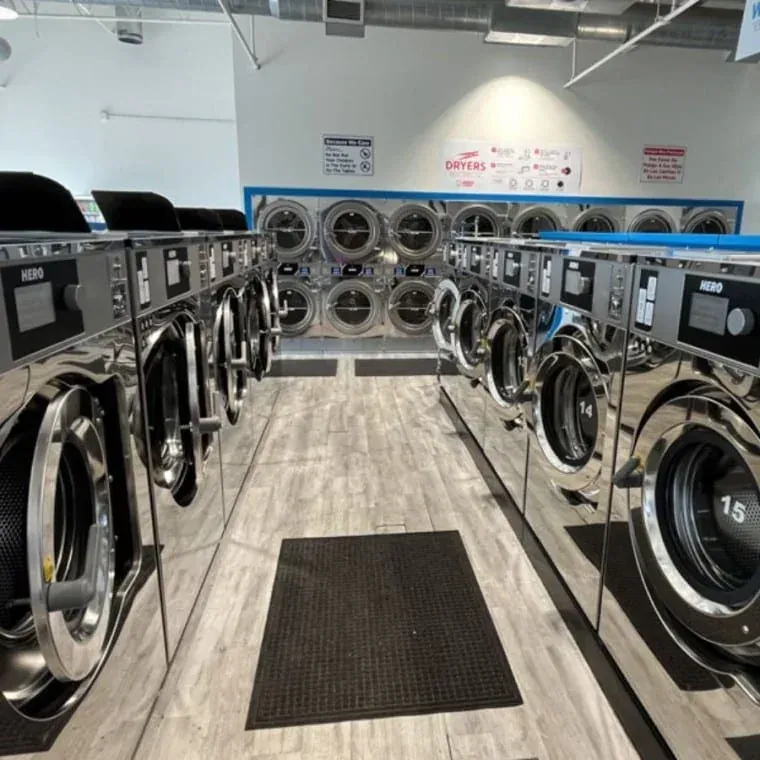
A laundromat is actually the best place to wash a sleeping bag because commercial machines are large enough to give the bag room to move freely during the wash cycle. Here's the step-by-step process:
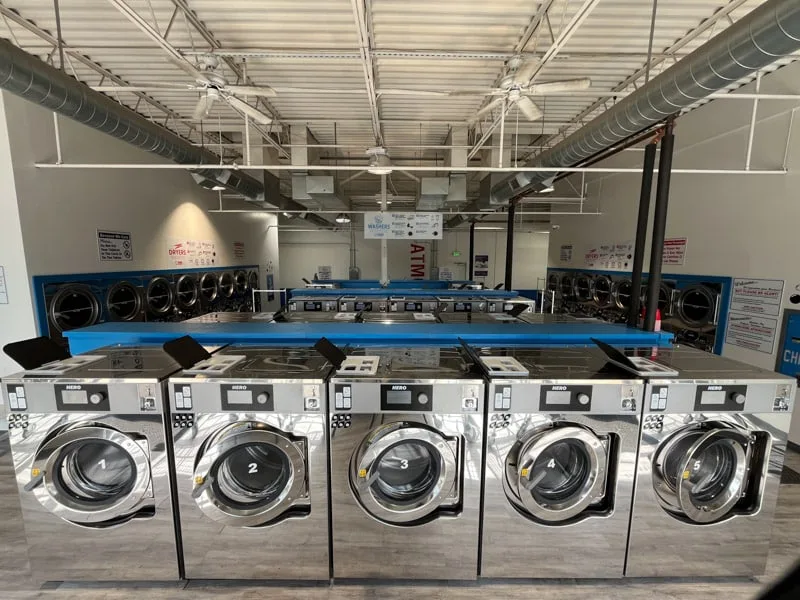
- Use a front-loading washer — Top-loaders with agitators can tear baffles and damage the shell fabric. Front-loading commercial machines are gentler and more effective. At Sandy Creek Laundromat, our 60 lb front-loading HERO washers are ideal for sleeping bags.
- Choose the right detergent — For synthetic bags, use a gear-safe detergent (like Nikwax Tech Wash or Grangers Performance Wash). For down bags, use Nikwax Down Wash Direct — never regular household detergent, which strips down's natural oils.
- Wash on cold or warm, gentle cycle — Hot water can damage both synthetic and down insulation. Cold water is safest; warm (not hot) is acceptable for synthetic bags.
- Run an extra rinse cycle — Detergent residue left in the fill reduces loft. An extra rinse ensures all soap is removed.
- Dry on low heat with dryer balls — This is the most important step. Use a large commercial dryer on LOW heat. Toss in 2-3 clean tennis balls or dryer balls — they break up clumps of fill (especially down) and restore loft. This step can take 2-3 hours for down bags. Be patient.
- Check for damp spots — Before packing your bag away, make sure it's completely dry. Even small damp spots can lead to mildew and odor. Squeeze different sections to check for moisture.
Can You Wash a Sleeping Bag at Home?
You can, but it's not ideal. Most home washing machines are too small for sleeping bags, especially down bags. Cramming a sleeping bag into a small machine can damage baffles, tear fabric, and result in uneven cleaning.
If you must wash at home, use a front-loading machine (never a top-loader with an agitator), cold water, and the appropriate detergent. The bigger issue is drying — home dryers are often too small to properly dry and fluff a sleeping bag, which can leave you with clumped, mildewy insulation.
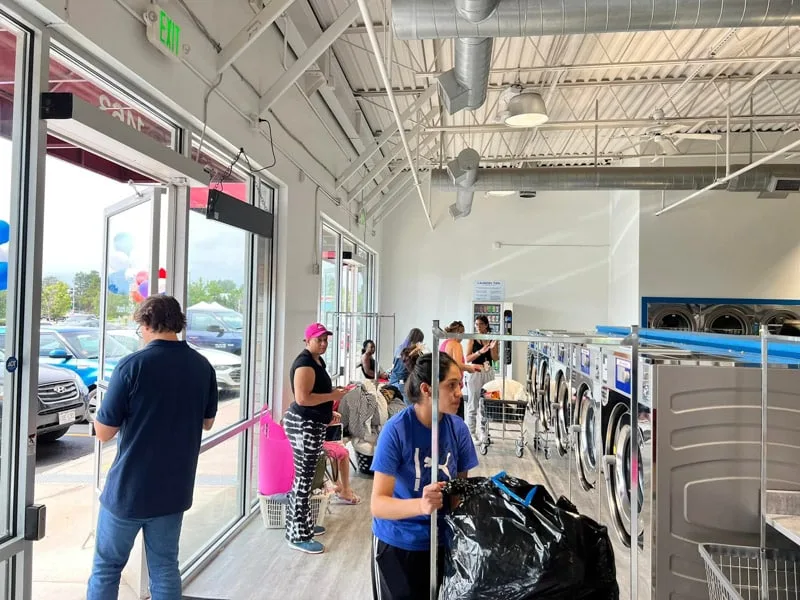
For most people, a laundromat with large commercial machines is the better choice. At Sandy Creek Laundromat in Colorado Springs, you can use our 60 lb self-service washers ($8.50 per load) and large dryers, or drop it off and let us handle it — synthetic bags are $15 and down bags are $20.
How Often Should You Wash Your Sleeping Bag?
For regular campers, clean your sleeping bag once or twice per season — or after every 20-30 nights of use. If your bag smells, feels clammy, or has visible dirt, it's time for a wash regardless of how many nights you've used it.
Between washes, you can extend the time between cleanings by using a sleeping bag liner (which absorbs sweat and oils instead of the bag), airing out your bag after each trip, and spot-cleaning the hood and collar area where oils accumulate most.
Common Mistakes That Ruin Sleeping Bags
Avoid these common errors that can permanently damage your sleeping bag:
- Using regular detergent on down bags — This is the #1 mistake. Regular detergent strips the natural oils from down, causing it to clump and lose insulation permanently.
- Using a top-loading washer with an agitator — The agitator can tear baffles and rip the shell fabric.
- Drying on high heat — High heat can melt synthetic fibers and damage down. Always use low heat.
- Storing a damp bag — Even slightly damp insulation will develop mildew. Make sure the bag is bone dry before storing.
- Storing compressed — Never store your sleeping bag in its stuff sack long-term. Use a large cotton or mesh storage sack that lets the fill stay lofted.
- Dry cleaning — Dry cleaning chemicals can damage both synthetic and down insulation. Never dry clean a sleeping bag.
Frequently Asked Questions
Ready to Get Your Sleeping Bag Cleaned?
Drop off your sleeping bag at Sandy Creek Laundromat and we'll have it clean, fresh, and lofty within 24 hours. Or use our large self-service machines to do it yourself.