Why Wash Your Comforter at a Laundromat?
King-size comforters, thick duvets, and weighted blankets are too large for most home washing machines. Cramming an oversized comforter into a small machine results in uneven cleaning, poor rinsing, and can even damage your washer's drum bearings.
Laundromats have commercial-grade machines with 40-60 lb capacities that give your comforter plenty of room to agitate and rinse properly. The result is a genuinely clean comforter — not one that's just been sloshed around in a too-small machine.
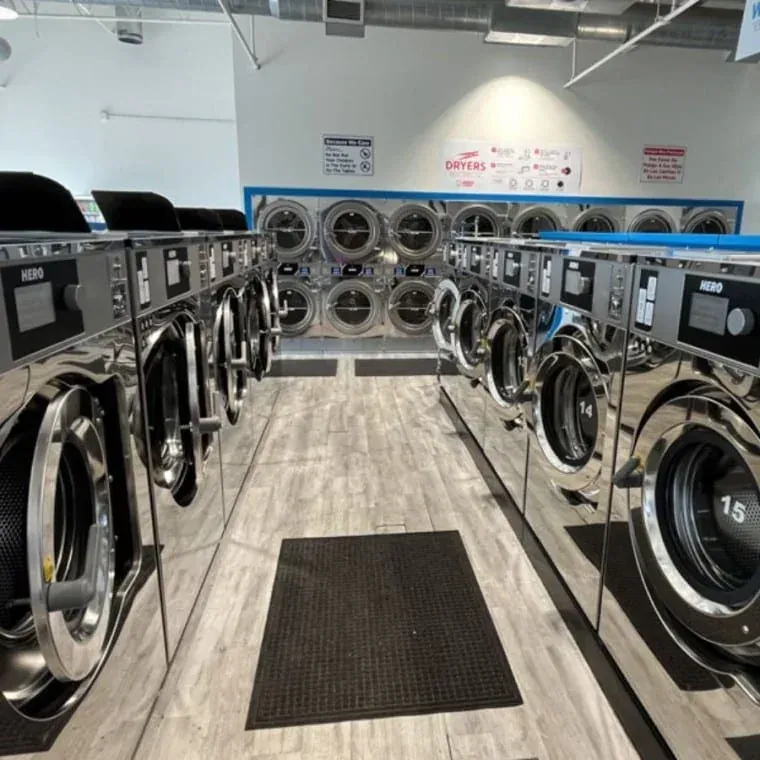
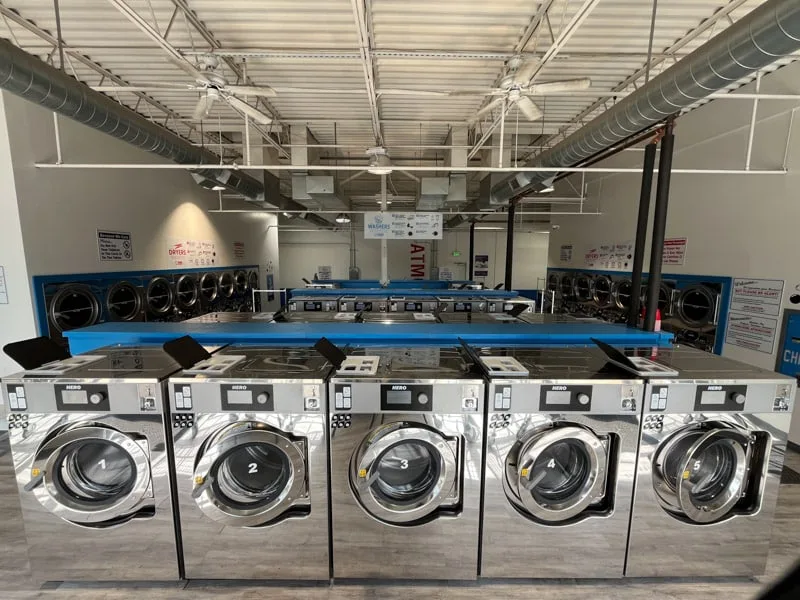
At Sandy Creek Laundromat in Colorado Springs, our largest washers are 60 lb capacity HERO machines by Laundrylux. They're front-loading (no agitator to snag fabric), have a 300g extract speed that removes more water before drying, and cost just $8.50 per load.
Step-by-Step: Washing a Comforter at a Laundromat
Here's exactly how to wash your comforter at a laundromat for the best results:
- Check the care label — Most comforters are machine-washable, but some (especially silk-filled or dry-clean-only) require special care. If the label says 'dry clean only,' respect that.
- Pre-treat stains — Spot-treat any visible stains with a mild stain remover before loading the machine. Focus on edges and the area near your face/neck where oils accumulate.
- Choose the right machine size — Use the largest available washer. Your comforter should fill about 2/3 of the drum, leaving room to move freely. For a king-size comforter, a 60 lb machine is ideal. Don't try to stuff it into a small machine to save money — the wash quality will suffer.
- Use mild detergent, less than you think — Use about half the amount of detergent you'd normally use. Too much detergent leaves residue in the thick fill that's hard to rinse out. Use a mild, fragrance-free detergent for best results. Never use bleach on colored comforters.
- Wash on cold or warm, gentle cycle — Cold water is safest for all comforter types. Warm is acceptable for cotton-shell comforters. Hot water can cause shrinkage and damage down fill.
- Run an extra rinse — Comforters are thick and trap detergent easily. An extra rinse cycle ensures all soap is removed, preventing that stiff, crunchy feeling.
- Dry on low heat with dryer balls — Transfer to a large dryer and dry on low heat. Add 2-3 clean tennis balls or dryer balls to prevent the fill from clumping. This step takes longer than you'd expect — 60-90 minutes for most comforters. Check for damp spots before taking it home.
How to Wash a Down Comforter
Down comforters require extra care because down is more delicate than synthetic fill. The key differences:
- Use down-specific detergent — Nikwax Down Wash Direct or a similar down-safe detergent. Regular detergent strips the natural oils from down, causing it to clump and lose loft.
- Cold water only — Down is more sensitive to heat than synthetic fill.
- Extra drying time — Down comforters can take 2+ hours to fully dry. They'll feel dry on the outside while still damp inside. Squeeze different sections to check for moisture.
- More dryer balls — Use 3-4 tennis balls or dryer balls to break up down clumps during drying.
Pro Tip: If your down comforter still has clumps after drying, put it back in the dryer with tennis balls for another 20-30 minutes on low heat. The balls will break up the remaining clumps.
How to Wash a Weighted Blanket
Weighted blankets (typically 15-25 lbs) need special consideration because of their weight and fill material (usually glass beads or plastic pellets).
- Check the weight limit of the machine — Most commercial washers can handle weighted blankets, but check the machine's capacity. A 20 lb weighted blanket needs at least a 40 lb machine.
- Use cold water and gentle cycle — The weight of the blanket puts extra stress on the machine, so a gentle cycle reduces wear.
- Mild detergent, no fabric softener — Fabric softener can coat the beads and make the blanket feel stiff.
- Dry on low heat or air dry — Some weighted blankets can't go in the dryer. Check the care label. If machine drying is okay, use low heat.
How Often Should You Wash Your Comforter?
Most sleep experts recommend washing your comforter every 2-3 months. If you use a duvet cover, you can extend this to every 4-6 months since the cover protects the comforter from direct contact with body oils and sweat.
Wash your comforter more frequently if you have allergies (dust mites accumulate in bedding), pets sleep on the bed, you eat in bed, or you sweat heavily at night.
Between washes, air out your comforter by hanging it outside on a dry day, or tumble it in the dryer on air-only (no heat) for 15-20 minutes to freshen it up.
Frequently Asked Questions
Don't Want to Do It Yourself?
Drop off your comforter at Sandy Creek Laundromat and we'll wash, dry, and fold it for you. Standard wash & fold pricing applies — no appointment needed.